
Sacred Geometry and Mental Focus
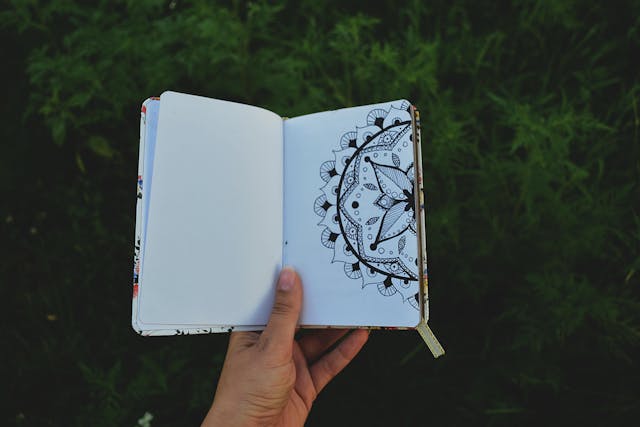
Finding Clarity Through Ancient Patterns and Symbolic Design
In our busy, overstimulated lives, staying focused can feel like a constant battle. With digital noise, emotional overwhelm, and daily stress, our attention is often pulled in many directions. But what if the key to mental clarity lies not in doing more—but in connecting with ancient patterns that reflect balance and harmony?
Welcome to the world of sacred geometry – a timeless language of shapes and symbols believed to hold energetic significance. Used in everything from meditation practices to architecture and healing, sacred geometry offers more than aesthetic beauty. It provides a way to still the mind, restore balance, and enhance focus.
What is Sacred Geometry?
Sacred geometry refers to specific geometric shapes and ratios that are found throughout nature, art, and the cosmos. These patterns are considered “sacred” because they reflect universal laws of harmony, proportion, and interconnectedness.
Common symbols include:
– The Flower of Life – a pattern of overlapping circles symbolizing creation and unity
– The Golden Ratio (Phi, \~1.618) – a proportion found in shells, flowers, and even galaxies
– The Sri Yantra – a Hindu symbol made of interlocking triangles representing cosmic energy
– The Metatron’s Cube – a complex figure made from 13 circles symbolizing balance and protection
These forms are found in ancient cultures worldwide—from Egyptian pyramids to Islamic mosaics to Tibetan mandalas. Their enduring presence suggests a deeper power: they help us remember what inner balance feels like.
How Sacred Geometry supports mental focus
While sacred geometry may seem mystical or abstract, its benefits for mental focus are grounded in psychology, neuroscience, and mindfulness. Here’s how it works:
🧠 1. Stimulates the Brain’s Visual and Pattern Recognition Centers
Our brains are wired to recognize symmetry, repetition, and proportion. Sacred geometric patterns naturally engage our visual system, drawing our attention and holding it—almost like a form of visual meditation.
📖 Research in Cognitive Psychology shows that viewing symmetrical and harmonious designs can increase visual attention and mental calmness (Jacobsen & Höfel, 2003).
This focus helps interrupt the mental noise of everyday life and allows space for clarity and reflection.
🌀 2. Induces a Meditative State
Many sacred geometry symbols are used as focal points in meditation practices. When you gaze softly at a mandala or trace a geometric pattern with your eyes, your brain enters a theta or alpha brainwave state—the same states associated with deep meditation and creative thinking.
This shift reduces stress, quiets overthinking, and allows greater access to concentration and present-moment awareness.
🌿 3. Balances Left and Right Brain Activity
Geometric patterns activate both the analytical left brain (logic, structure) and the creative right brain (intuition, emotion). This integration supports whole-brain thinking, which is associated with improved problem-solving and mental clarity.
Practices like drawing, coloring, or observing sacred geometry help synchronize both hemispheres of the brain, bringing mental cohesion and balance.
Sacred Geometry in Daily Life
You don’t need to be an artist or mathematician to benefit from sacred geometry. Here are a few simple ways to integrate these patterns into your daily life for better mental focus:
🎨 1. Use Mandalas or Yantras in Meditation
Choose a sacred symbol (like the Flower of Life or Sri Yantra) and place it at eye level. Sit comfortably, breathe slowly, and gently rest your gaze on the image for a few minutes.
Notice any shift in your thoughts, emotions, or energy. Let the pattern guide you into stillness.
✍️ 2. Colour or draw Geometric Patterns
Adult colouring books featuring sacred geometry are widely available. The act of colouring repetitive, balanced shapes is soothing and helps the mind focus on the present.
You can also try drawing simple shapes like circles, triangles, or spirals to engage your mind without overwhelming it.
📖 A 2012 study published in Art Therapy: Journal of the American Art Therapy Association found that coloring mandalas significantly reduced anxiety and increased mindfulness in participants (Curry & Kasser, 2005).
🖼️ 3. Surround yourself with Sacred Patterns
Place geometric art in your workspace or home—on your walls, desktop backgrounds, or as altar pieces. These visuals create an environment of subtle order and focus, gently reminding your mind to slow down and re-center.
🔲 4. Use Geometry in Breath or Movement Practice
Some yoga or qigong routines use patterns like spirals or squares to guide breath or movement. Visualizing these shapes during practice can enhance concentration and body awareness.
Try breathing in a “box pattern” (inhale 4, hold 4, exhale 4, hold 4) while imagining a square—this simple exercise builds mental clarity and nervous system regulation.
Why this matters now
In a world of digital distractions and fragmented attention, sacred geometry offers something rare: a chance to return to harmony. It reminds us that stillness doesn’t mean stagnation—it means realignment. When our minds feel chaotic, looking at the symmetry of sacred patterns can remind us that balance is always possible.
Final Thoughts
Sacred geometry isn’t just about aesthetics or spiritual symbolism—it’s a practical tool for modern mental wellness. Through its timeless forms, it helps us quiet the noise, focus our thoughts, and reconnect with our inner rhythm.
Whether you spend a few minutes gazing at a mandala, colour a geometric design, or simply notice the symmetry in a flower, you’re inviting more clarity, calm, and coherence into your mind.
Because sometimes, the path to better focus isn’t about thinking harder. It’s about seeing clearly – and remembering that balance lives within you.
References
– Jacobsen, T., & Höfel, L. (2003). Descriptive and evaluative judgment processes: Behavioral and electrophysiological indices of processing symmetry and aesthetics. Cognitive, Affective, & Behavioral Neuroscience, 3(4), 289–299.
– Curry, N. A., & Kasser, T. (2005). Can coloring mandalas reduce anxiety? Art Therapy: Journal of the American Art Therapy Association, 22(2), 81–85.


Leave a Reply